The “Digital Innovation Booth,” held during the second day of the 2024 Student Festival at Isabela State University – Angadanan Campus, was an innovative event designed to promote student research to a broader audience. Departing from the conventional academic setting where research is typically shared with a few panelists, this event empowered students to showcase their work directly to the public. It represented a shift towards a more inclusive and accessible form of academic engagement, directly supporting the goals of Sustainable Development Goal 4: Quality Education and SDG 9: Industry, Innovation, and Infrastructure.
The core mission of the Digital Innovation Booth was twofold: to introduce the public to the scope and impact of Information Technology (IT) research and to boost students’ confidence in presenting their work. This initiative aligned with SDG 4 by providing students with quality educational experiences beyond the classroom, fostering critical thinking, communication skills, and public engagement. Furthermore, by showcasing IT innovations designed to address societal challenges, the event also contributed to SDG 9, encouraging sustainable industrial growth through research and innovation.
Purpose-Driven Presentation for SDG 4 and SDG 9
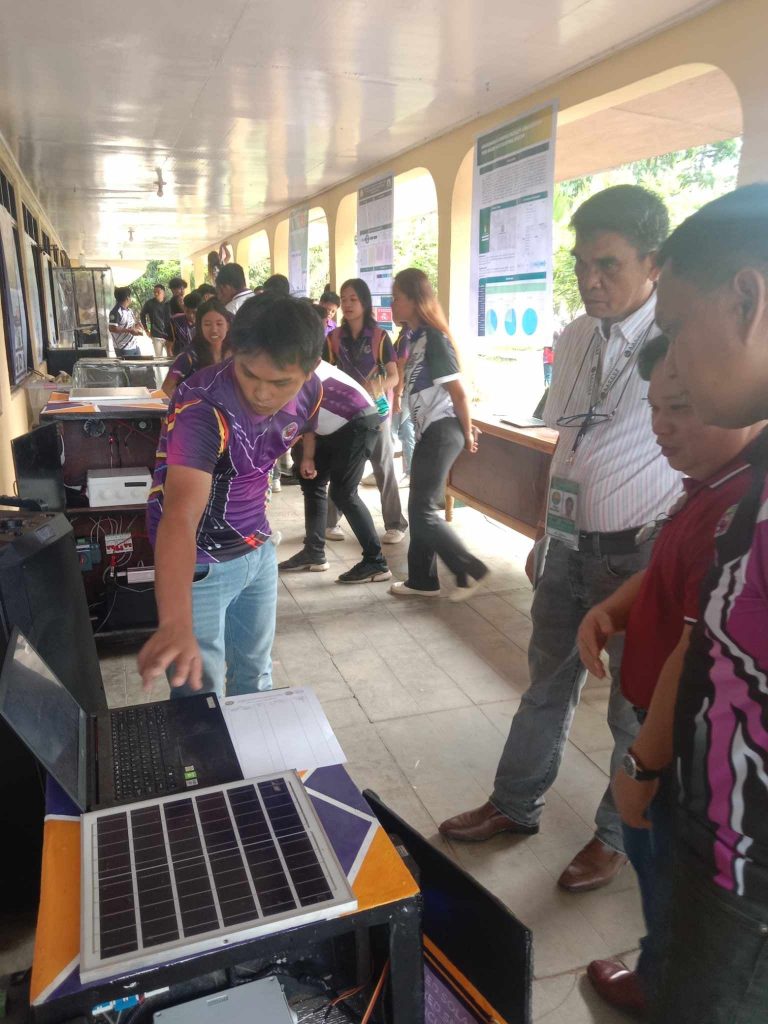
The Digital Innovation Booth, part of the Student Festival, started at 8:00 a.m. and ended at about 12:00 p.m. The venue chosen by the IT program was in front of the Information Technology building, in a hallway. The IT Program of ISU-AC involved two programs during the fair: Web and Mobile Application Development and Network Security. Both programs showcased their talents and passion in knowledge work.
The Bachelor of Science in Information Technology program chair, Associate Professor Benjamin Bulawit Jr., initially planned to allow one hundred (100) people to join as the audience for the event. However, because of the fast-paced nature of the presentations, he decided to accept a maximum of two hundred (200) student audience members to witness the presentations. The program decided to keep track of attendance by using a logbook. The Campus Director for Academic Affairs, Professor Warlito Antonio, and the Campus Director for Research, Professor Rommel Cristobal, were invited to be evaluators.
At its heart, the Digital Innovation Booth sought to educate the public about what Information Technology research entails and how it contributes to society. By bridging the gap between academia and the community, the event showcased the importance of knowledge-sharing in advancing SDG 4: Quality Education. Through interactive presentations, the public engaged with various student projects, gaining insights into how IT innovations are shaping education, healthcare, business, and other key sectors.
The event was also a practical application of SDG 9, which focuses on promoting sustainable industrialization, fostering innovation, and building resilient infrastructure. Many finished prototypes were presented by undergraduate students, while third-year students presented their proposals, both focused on the creation of digital solutions aimed at improving local industries, enhancing communication networks, and driving technological advancements that can benefit both local and global communities.
Developing Confidence and Bridging the Academic-Community Divide
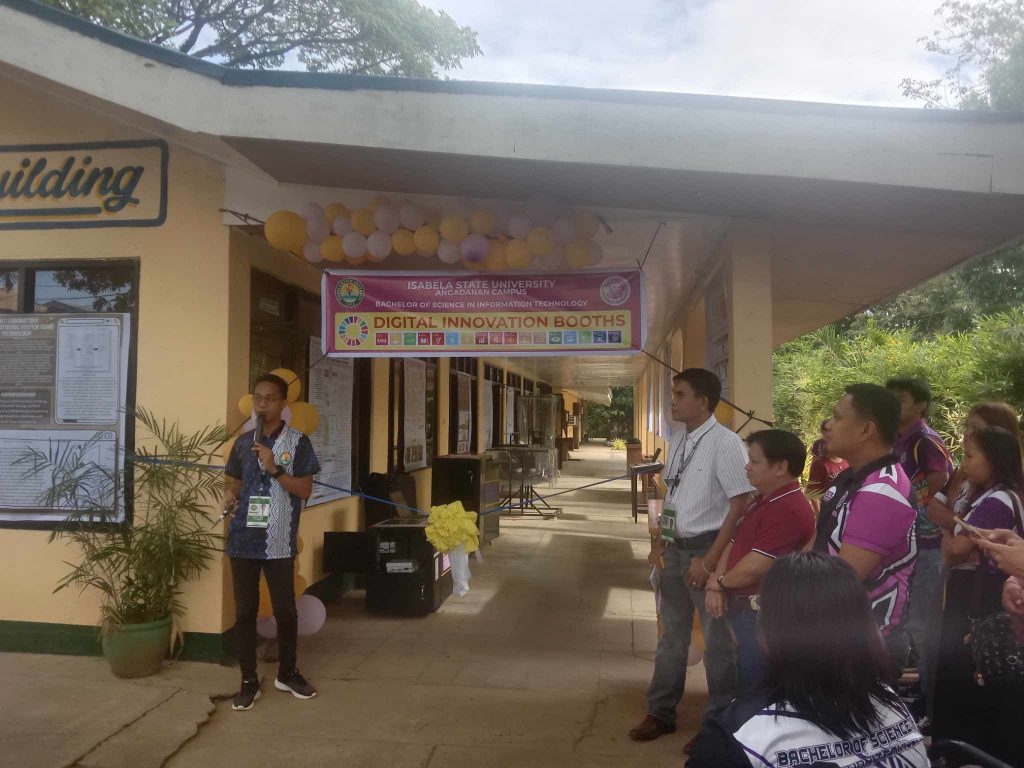
Another major goal of the Digital Innovation Booth was to build students’ confidence in presenting their research to a non-academic audience. In alignment with SDG 4, the event provided an opportunity for students to hone their communication skills, an essential aspect of quality education. Presenting in a public setting, outside the familiar academic environment, allowed students to develop a deeper understanding of how their research could have a real-world impact.
At the same time, the event served as a platform for students to contribute to SDG 9 by demonstrating their innovative ideas. Through their projects, they highlighted how Information Technology can drive progress in areas such as infrastructure, industry, and sustainable development. These innovations have the potential to transform industries, improve the efficiency of services, and provide more equitable access to technology in underserved communities.
Impact on Students and the Community
The event was not only a learning experience for the students but also an educational opportunity for the community. By making IT research more accessible, the Digital Innovation Booth supported SDG 4 by promoting lifelong learning and increasing the community’s understanding of the role of technology in solving societal challenges.
Students also gained valuable skills that are integral to SDG 9. They learned how to articulate complex ideas in a way that non-experts could understand, fostering innovation through public engagement. This capacity to bridge technical and everyday language is critical for those entering fields that rely on technological innovation and industrial development.
The public, in turn, gained a greater appreciation for the transformative power of research and technology. Many attendees left the event with a better understanding of how innovations in IT could enhance industries, improve infrastructure, and drive sustainable progress. These conversations, sparked by the students’ work, underscored the essential role that SDG 9 plays in fostering inclusive and sustainable industrialization.
Looking Ahead
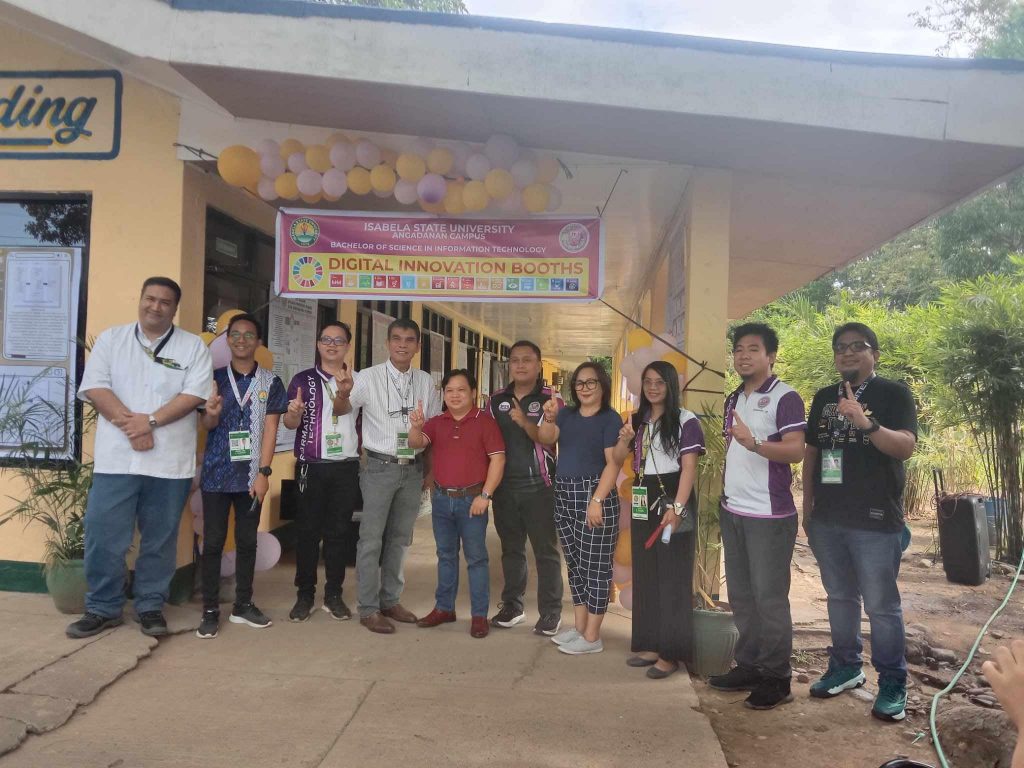
The success of the Digital Innovation Booth has paved the way for more events that combine academic research with community engagement. As the university continues to expand opportunities for students to showcase their work, there are plans to integrate more interdisciplinary projects that involve not just Information Technology but other fields of study as well.
By continuing to align with the principles of SDG 4: Quality Education and SDG 9: Industry, Innovation, and Infrastructure, the Digital Innovation Booth has demonstrated that student research can be a powerful tool for public education and sustainable development. It has shown that by bringing innovation out of the classroom and into the community, students can actively contribute to building a more informed and technologically advanced society. Dr. Benjamin Bulawit, the program chair of BS InfoTech, said that the long-term vision of the Digital Innovation Booth in the years to come is to invite neighboring high schools and high school students to watch the presentations. On top of that, the IT program desires that students’ work will be subject to publication.